For inventors and first-time founders
PCB design services that wire your invention's brain right the first time
Your circuit board is the brain of your product. We design it end to end: the schematic, the parts, the battery and charging, the antenna and the PCB layout, then check it for assembly and interference before you pay for a build. Under NDA, by a US team, with every file yours.
- NDA from first contact
- You own every file
- 200+ products built
- Toledo, Ohio, USA
The short answer
What is PCB design?
PCB design is turning your idea into a working circuit board. It starts with a schematic, the circuit drawn on paper, then picks real parts you can buy, plans power and the antenna, and lays out the copper paths on the board. The result is a set of files any factory can build, test and repeat.
- SchematicThe circuit drawing: every part and how they connect.
- PCB layoutWhere each part sits and how the copper paths run.
- Gerbers and BOMThe factory files and the full list of parts to buy.
Where first boards go wrong
Why so many first circuit boards don't work
Industry studies put the average at about 2.9 board revisions per project, and roughly half of products fail their first interference test. These are the four reasons we see most, and how we stop each one.
"None of it works"
Boards arrive and won't power up, often from a bad footprint or weak power.
Our fixTwo design reviews before anything is built.
A part vanishes
A chip goes out of stock or ten times the price just before your build.
Our fixIn-stock parts, each with a drop-in alternate.
Fails the EMC test
HealthyPi 5 failed its emissions test, and the fix was a full re-layout.
Our fixGround planes from day one and a pre-scan.
Metal kills Bluetooth
A metal case weakened NocFree's Bluetooth, so its boards were scrapped.
Our fixWe test the antenna inside your real housing.
These happen to experienced teams too. Statistics are published industry estimates.
What we design
Everything your circuit board needs, in one team
Six jobs that decide whether your board works, ships and passes, designed together so nothing is left for the factory to guess.
Schematic
The full circuit drawing, reviewed twice before layout begins.
Parts and sourcing
Active, in-stock parts with an alternate for every key chip.
Power and battery
Charging, protection and battery life sized for your product.
Antenna and radio
Pre-certified modules placed so the signal survives the case.
PCB layout
Copper, layers and part placement that fit your enclosure outline.
Ready to build
Assembly checks, test points and factory files that build cleanly.
Start where you are
Bring us a sketch, a breadboard or a schematic
Need the housing too? See electronic product design. Already have an electronics team? See our page for technical founders.
How it runs
From schematic to a board that powers on
The first working board typically takes 6 to 10 weeks. Each step ends with files you keep, so you're never locked in.
Step 01 of 08
Schematic
We turn your idea into the circuit drawing.
You get
Schematic PDF and source files.
You own it
Yes, from the day it is delivered.
Step 02 of 08
Parts
We pick in-stock parts with alternates.
You get
Parts list (BOM) with lifecycle status.
You own it
Yes, from the day it is delivered.
Step 03 of 08
Power
We size charging, protection and battery life.
You get
Power budget and battery choice.
You own it
Yes, from the day it is delivered.
Step 04 of 08
Antenna
We place the radio module and keep-out zone.
You get
RF placement plan and module check.
You own it
Yes, from the day it is delivered.
Step 05 of 08
Layout
We place parts and route the copper paths.
You get
Layout source and a 3D board model.
You own it
Yes, from the day it is delivered.
Step 06 of 08
Assembly
We check the board can be built and tested.
You get
Gerbers, pick-and-place and drawings.
You own it
Yes, from the day it is delivered.
Step 07 of 08
EMC pre-scan
We scan for interference before the paid lab.
You get
Pre-scan report and fix list.
You own it
Yes, from the day it is delivered.
Step 08 of 08
Bring-up
We power the first boards and debug them.
You get
Test report and Rev B fix list.
You own it
Yes, from the day it is delivered.
Wireless
Pre-certified module or a custom radio?
Our default
Pre-certified module
Carries its own FCC grant, so your product skips most radio testing. TI estimates a module saves about $30k in certification and months of RF design.
Best forBest for first products and runs under 10,000 units a year.
At volume
Custom radio (chip-down)
Cheaper per unit, but you pay for full radio certification and RF design yourself. The savings only add up once your yearly order sizes grow large enough.
Best forWorth it at tens of thousands of units a year or more.
Either way, your product still needs FCC testing for its other electronics. See certification and compliance.
Cost and time
What PCB design costs, honestly
Most "PCB cost" answers online are about making boards, not designing them. Here are published industry estimates for both.
- Freelance designer$30 to $100 an hour
- US design firmAbout $90 to $150 an hour
- Complex board exampleAbout 252 hours, around $25,000, before prototypes
- Prototype boardsUp to about $2,000 per round; plan for at least two
- 4 layers vs 2About 1.5 to 1.8 times the bare-board cost
- First working boardTypically 6 to 10 weeks; Rev B another 8 to 14
Your price
What changes the price
- Number of layers
- Wireless radio
- Battery and charging
- Tiny size
- Fine-pitch chips
- Number of sensors
Published industry estimates, checked November 2026. Import duties on China-made boards changed several times in 2025 and 2026, so we compare US and offshore landed cost when you build. Your fixed quote follows the free call.
Book my free 30-minute callBuilt to be safe
Batteries charge safely, and shorts stay impossible
Most electronics recalls involve batteries and charging, not the board layout. Fitbit paid a $12.25M penalty in 2025 over Ionic smartwatches that overheated. We use certified cells, a proper charger and protection circuit, and spacing that makes shorts physically impossible.
- Certified cellsUL 2054 or IEC 62133-2
- Safe chargingCharger and protection chips
- Ships legallyUN 38.3 battery testing
What you own
Every board file is yours
- SchematicPDF plus the native design source.
- Layout sourceFull PCB design, in KiCad or Altium.
- GerbersFactory-ready fab and drill files.
- Parts listEvery part, with alternates.
- Pick-and-placePlacement file for the assembly line.
- Test reportBring-up results and the Rev B fix list.
How the best boards are built
Small products where the board shape is the design
Apple AirTag
A ring-shaped board around the coin cell leaves room for a big speaker.
Oura Ring
A rigid-flex board bends into the ring, with the antenna built in.
Apple Watch
Its whole computer fits in one tiny package, now under 16 mm long.
Trends we design for
- Pre-certified radio modules
- Matter over Thread
- USB-C charging
- AI-assisted layout, engineer-checked
Our own work
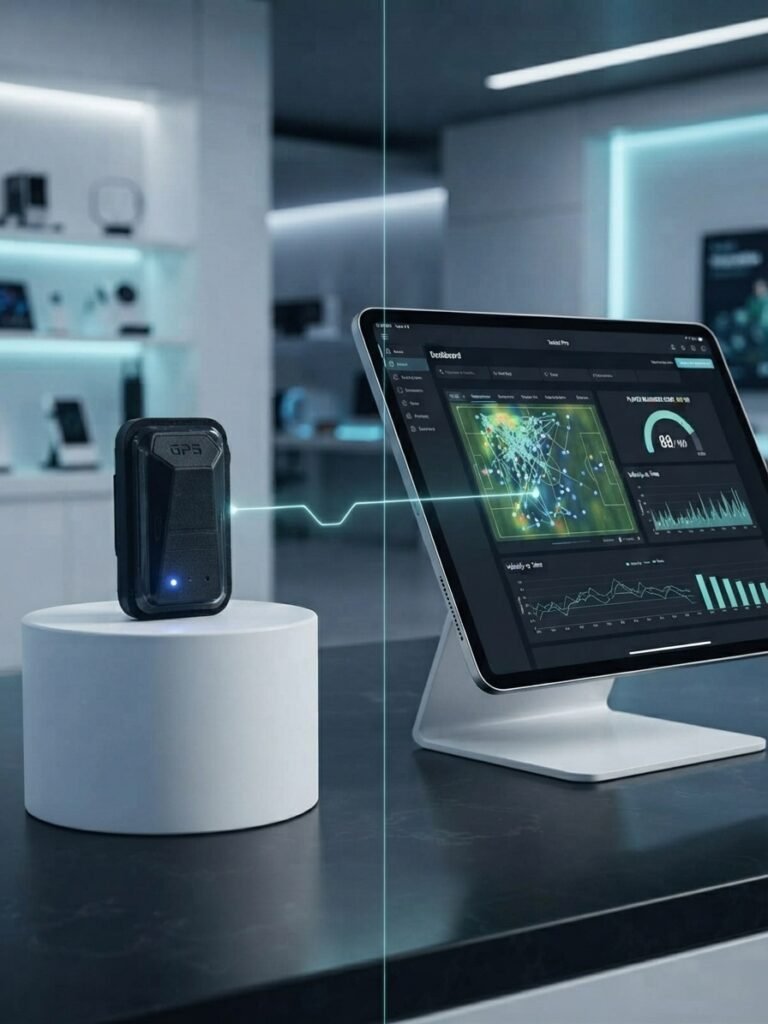

FAQ
PCB design questions inventors ask us
How much does PCB design cost?
Published industry estimates put freelance designers at $30 to $100 an hour and US design firms at about $90 to $150. A complex board can take around 250 hours. Prototype boards add up to about $2,000 per round. We give you a fixed quote after a free call.
How long does it take to design a circuit board?
A first working board typically takes 6 to 10 weeks from schematic to bring-up. A second revision, with fixes from testing, usually takes another 8 to 14 weeks. Simple boards can be faster.
How many layers does my PCB need?
Simple, low-speed boards can use 2 layers. Anything with Bluetooth, Wi-Fi or a fast chip usually needs 4, because a solid ground plane helps the radio and the interference test. Dense wearables may need 6 or more.
Do I own the design files?
Yes. You receive the native design source, schematic PDF, Gerbers, parts list, pick-and-place file, drawings and test report. You can take them to any factory you choose.
Do I need a schematic before I contact you?
No. Most inventors start with an idea, a sketch or a breadboard. We create the block diagram and schematic for you, then review it with you before layout begins.
Should I use a pre-certified wireless module?
For most first products, yes. A module carries its own FCC grant, which saves a lot of testing and RF design. A custom radio only pays off at high volume, usually tens of thousands of units a year.
Will my board pass FCC testing?
We design for it from day one, with ground planes, filtering and an interference pre-scan before the paid lab. Only an accredited lab can confirm a pass. See our certification page for the full process.
How many board revisions should I expect?
Plan for at least two. Industry studies put the average at about 2.9 revisions per project. Design reviews, assembly checks and a pre-scan are how we keep that number low.
Can you make my board smaller?
Often, yes. We can move to more layers, smaller parts, a flexible board or a smaller module. We'll tell you the cost and the trade-offs before you decide.
Which design software do you use?
We work in industry-standard tools such as Altium and KiCad, and deliver native files you can open and edit. KiCad is free, so you can view and change your design without a paid licence.
Do you manufacture the boards too?
We prepare everything a factory needs and can manage prototype builds with US or offshore assemblers, comparing landed cost at the time. See our manufacturing page for production runs.
Tell us about your idea
Share as much or as little as you like. An engineer reads every enquiry and replies within one business day, under NDA before you share details.